
Leather Goods Quality Control: What Brands Should Check Before Bulk Production
Quality control is where a manufacturer's claims get tested against reality. Every factory will tell you their quality is high. What actually matters is whether they have a defined, repeatable inspection process, or whether "high quality" is simply a phrase used to close the sale.
This guide walks through what a genuine leather goods quality control process should cover, so you know what to ask before committing to a bulk production run.
Table of Contents
- Material Quality Control
- Construction Quality Control
- Hardware Quality Control
- Branding Quality Control
- Functional Testing
- Final Inspection
- FAQ
Material Quality Control

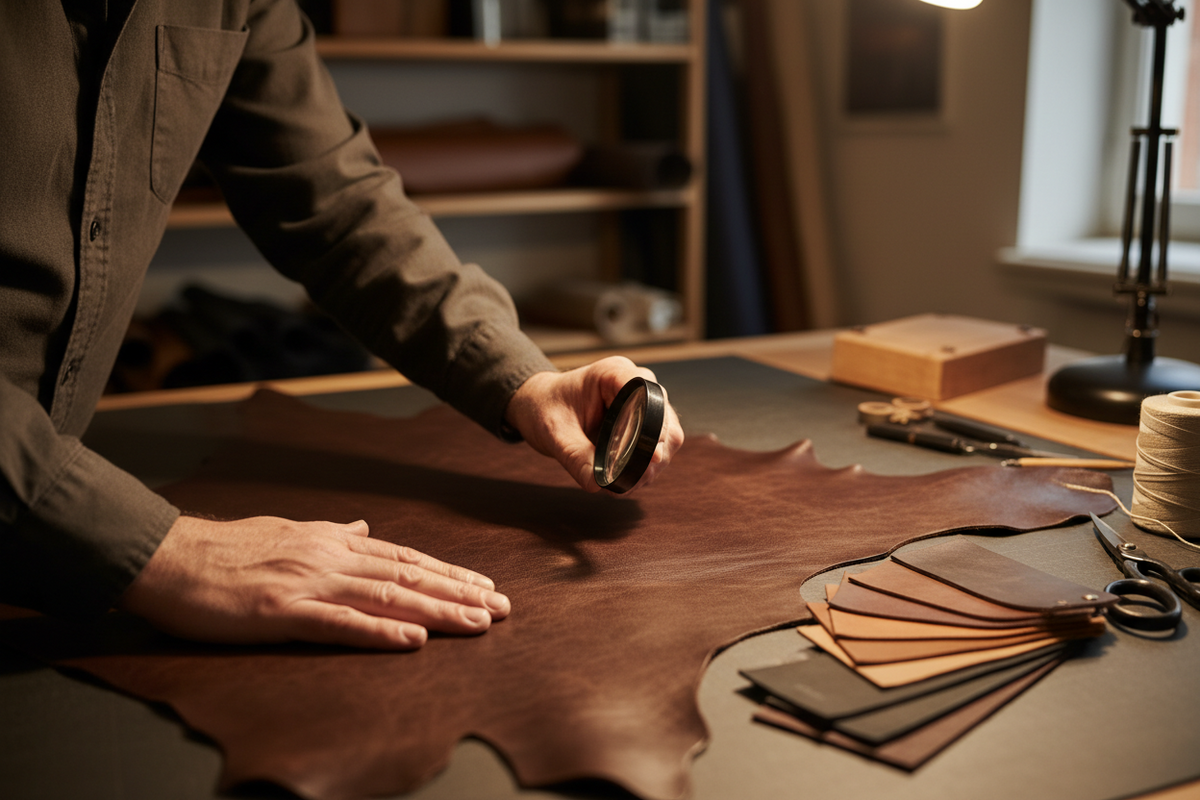
Quality begins before construction, at the material stage. A proper inspection process should check:
- Leather grade, confirming the hide matches the agreed specification, whether full-grain, top-grain, or another tier
- Thickness consistency across panels, since uneven thickness affects both durability and how a piece drapes or holds shape
- Colour consistency across the batch, particularly important for brands using a specific custom or brand-matched color
- Surface quality, checking for natural markings that fall outside agreed tolerance, or visible defects that shouldn't be in the finished product
A manufacturer that can't describe how they check these specific points before cutting begins is a manufacturer working without a real material QC process. For more on what separates leather grades in the first place, see our guide on full-grain vs top-grain leather.
Construction Quality Control
Once material passes inspection, construction quality determines how the finished product actually holds up. This includes:
- Stitching consistency, checking stitch length and tension are uniform across the piece
- Seam alignment, confirming panels line up correctly rather than shifting during assembly
- Edge finishing, checking edges are properly burnished, painted, or folded depending on the construction method
- Reinforcement at stress points, such as handle attachments and corners, where a bag experiences the most wear
Hardware Quality Control

Hardware failure can cause a leather bag to underperform, even when the leather itself is excellent. Inspection should cover:
- Zipper function, testing smooth operation across the full length, not just a quick pull at one end
- Buckle and clasp strength, confirming they hold under realistic load
- D-rings and other load-bearing hardware, checking attachment points as much as the hardware itself
- Plating and finish consistency, since inconsistent plating is one of the most visible quality issues to a customer
Branding Quality Control
For private label and OEM brands, branding execution is part of quality control, not a separate concern. This means checking embossing depth and clarity is consistent across units, logo placement matches the approved sample exactly, and any woven or printed labels are attached securely and positioned correctly.
Functional Testing
Beyond how a product looks, functional testing confirms it performs as intended. This includes testing zippers and closures through repeated use, checking handles and straps under realistic weight, and confirming compartments, pockets, and dividers function as designed rather than just as they appear in a flat sample photo.
Final Inspection

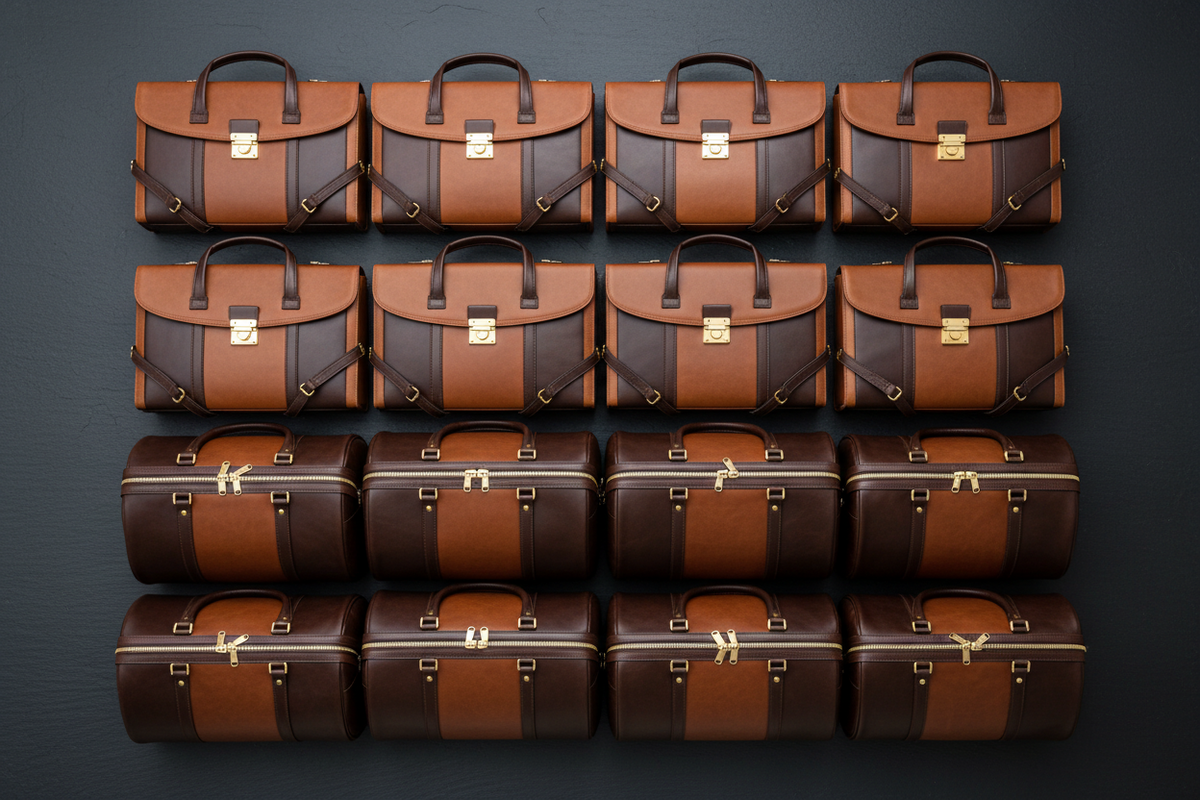
The final inspection stage should compare finished units directly against the approved sample, since this is the actual quality benchmark that was agreed before production began, not a general quality standard. This typically includes a random sample inspection across the batch rather than checking every single unit, verification of correct packaging per unit, and a final quantity count against the purchase order before shipment.
A manufacturer with a genuine final inspection process will be able to describe exactly what percentage of units they check and what they do when a defect is found, rather than offering a vague assurance that "everything is checked."
Looking for a manufacturing partner with a real quality process, not just a promise?
Every product at Obi Pelle passes through hands that understand leather, backed by a defined inspection process at every stage. Discuss your project with our team →
FAQ
What should I ask a manufacturer about their quality control process? Ask specifically what they check at each stage, material, construction, hardware, and final inspection, and what percentage of units are inspected before shipping.
Is 100% inspection standard in leather goods manufacturing? Not typically. Most manufacturers use random sample inspection across a batch rather than checking every single unit, though the exact method should be disclosed and agreed upfront.
What happens if a defect is found during final inspection? This varies by manufacturer, but a reliable partner should have a clear process for handling defective units, whether that's rework, replacement, or exclusion from the shipped batch.
Why does hardware quality matter as much as the leather itself? Hardware failure, such as a broken zipper or weak clasp, is one of the most common reasons a leather bag underperforms even when the leather itself is high quality.
How does quality control differ between OEM and private label production? The inspection process itself is similar, but OEM production often involves more custom specifications to verify against, since there's no pre-existing proven construction to benchmark against. For more on how the two models differ, see our guide on OEM vs private label leather goods.
Related reading: How to Choose the Right Leather Goods Manufacturer for Your Brand · Leather Bag MOQ: What Brands Need to Know · Full-Grain vs Top-Grain Leather