How to Choose the Right Leather Goods Manufacturer for Your Brand
Choosing a leather goods manufacturer is one of the most consequential decisions a brand will make. The factory behind your bags, wallets, and accessories becomes the invisible engine behind your quality, your margins, and ultimately your reputation with customers. Get it right, and production becomes a reliable, repeatable process. Get it wrong, and even a strong product idea can be undone by inconsistent stitching, missed deadlines, or a supplier who can't scale with you.
This guide walks through what actually matters when evaluating a leather goods manufacturer, not as a generic checklist, but as the real questions a brand should be asking before committing to a production partner.

Table of Contents
- Product Capability
- Material Capability
- Design & Development
- Pattern Making
- Sampling
- Minimum Order Quantity (MOQ)
- Quality Control
- Branding
- Packaging
- Production Capacity
- Communication
- Export Capability
- Reorder Consistency
- Questions to Ask Before Approving a Supplier
- FAQ
Product Capability
Not every leather manufacturer makes every kind of product well. A factory that excels at structured briefcases may not have the same tooling or skill set for soft, unstructured totes, and a specialist in small leather goods like wallets and card holders may not have the machinery for full-size travel bags.
Before anything else, confirm the manufacturer has genuine, demonstrated experience in the specific product category you need, not just "leather goods" as a broad claim. Ask to see finished examples in your category, not just their general portfolio.
Material Capability
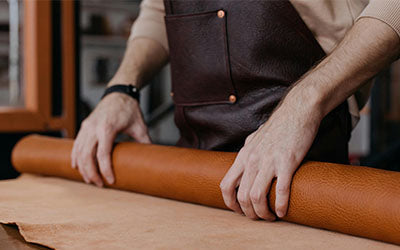
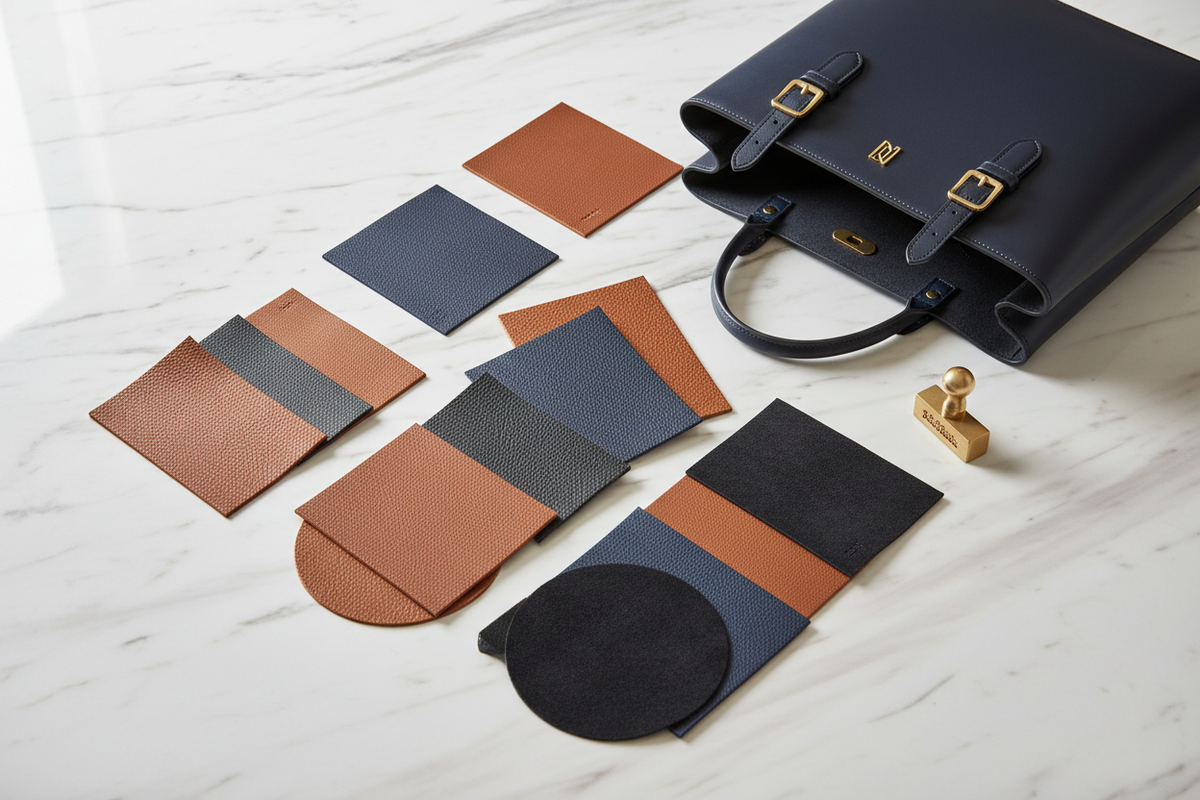
Material sourcing is where quality is decided long before a single stitch is made. A capable manufacturer should be able to speak specifically about:
- The type of leather offered (full-grain, top-grain, vegetable-tanned, chrome-tanned) and the difference in how each performs and ages
- Where the leather is sourced and how consistently that supply chain performs
- Hardware sourcing (brass, zinc alloy, zippers, buckles) and whether components are sourced to a consistent specification batch to batch
A manufacturer that can't clearly explain its material sourcing is a manufacturer that can't guarantee consistency. If you're weighing which leather grade fits your product, see our guide on full-grain vs top-grain leather.
At Obi Pelle, our leather is sourced from LWG Gold-rated tanneries, the highest environmental rating awarded by the Leather Working Group.
Design & Development
Some brands arrive with a fully finished design. Others arrive with a reference product or simply an idea. A strong manufacturing partner should be able to work across that entire spectrum, interpreting a rough concept into something production-ready, not just executing a design that's already complete.
This is also where you learn whether a factory offers genuine private label and OEM development, or whether it's better suited to producing from designs you supply as-is. For a full breakdown of these two models, see our guide on OEM vs private label leather goods.
Pattern Making
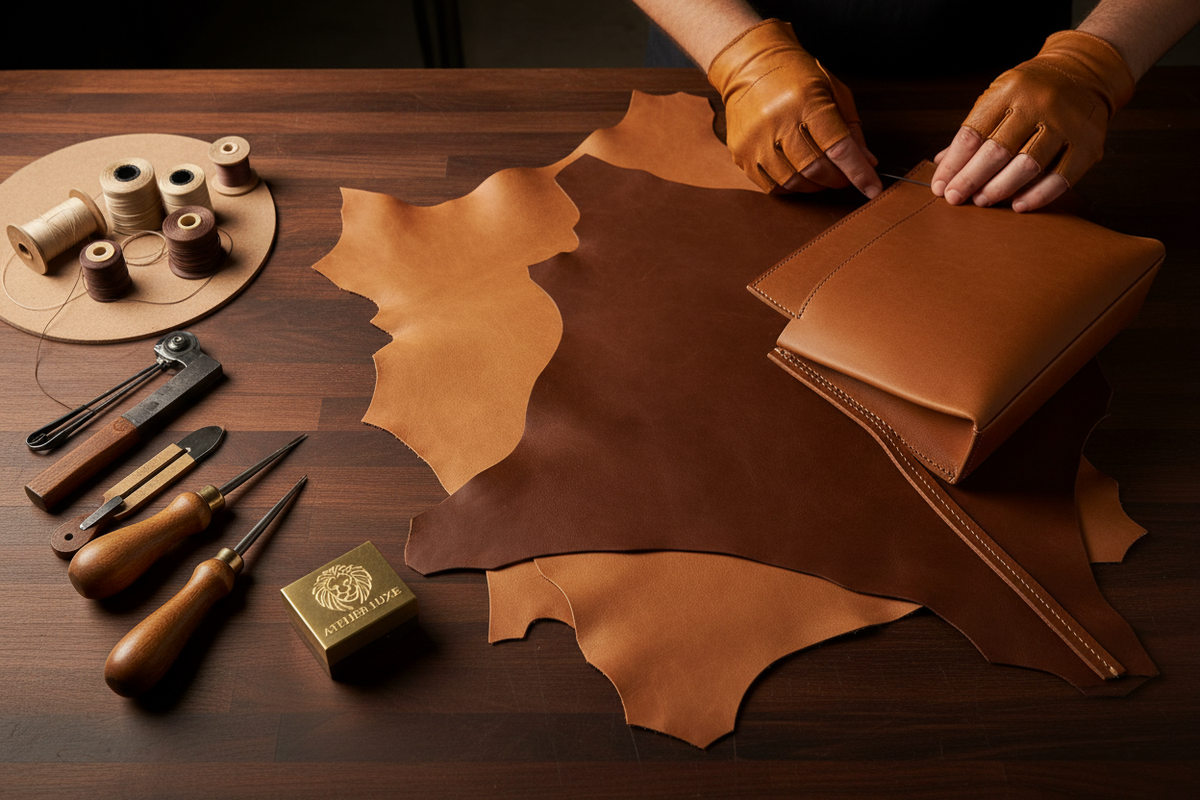
Pattern making is the technical bridge between a design sketch and a physical product. It determines fit, proportion, and how efficiently a design translates into consistent, repeatable units at scale.
Ask whether pattern development happens in-house. A manufacturer with in-house pattern-making capability can iterate faster and catch construction issues before they reach a full production run.
Sampling
Sampling is where a design first becomes physical, and where problems are far cheaper to catch than after bulk production has started. A reliable manufacturer should offer a clear sampling process, communicate honestly about sample lead times, and be willing to revise a sample based on your feedback before moving to production.
Treat the sample as a preview of what bulk production will actually look like. If a manufacturer's sample quality is inconsistent or rushed, that's a signal worth taking seriously.
Minimum Order Quantity (MOQ)
MOQ is one of the first questions most brands ask, and one of the most commonly misunderstood. MOQ isn't always a single number; it can apply differently depending on:
- Per style versus total order quantity across styles
- Material minimums, which may differ from finished product minimums
- Hardware minimums, particularly for custom-finished hardware
- Custom color minimums, since custom-dyed or -finished leather often carries its own threshold
- Logo or embossing minimums, especially for custom branding tooling
A manufacturer's actual MOQ depends on the specific product, materials, and customization involved, which is exactly why it's worth discussing directly rather than relying on a single published number. Reducing the number of SKUs in a first production run is often the most practical way to lower MOQ risk while still testing the market. See our full breakdown in leather bag MOQ: what brands need to know.
Quality Control
Quality control should be a defined process, not a vague assurance. Ask what a manufacturer actually checks: material grade and consistency, stitching and seam alignment, hardware function, embossing and logo placement, and final inspection against an approved sample. We've covered this in more depth in our companion guide on leather goods quality control, what to check before committing to a bulk production run.
Branding
If private labeling or OEM branding matters to your business, confirm what branding methods the manufacturer actually supports (logo embossing, engraving, printed or woven labels) and whether they can show examples of that branding applied cleanly to leather, not just fabric or other materials.
Packaging
Packaging is often treated as an afterthought, but for a private label brand, it's part of the product experience. Ask whether the manufacturer can support custom packaging, branded dust bags, or inserts, and at what order volume that becomes practical.
Production Capacity
A manufacturer's production capacity should genuinely match your timeline and order size, not just today, but as your order volume grows. Ask about realistic lead times for your specific product and quantity, and be cautious of timelines that sound too fast to be credible for genuine handcraft leather work.
Communication
Production runs smoothly when communication is clear and consistent. A manufacturer that's slow or vague to respond during the sampling stage is unlikely to improve once a bulk order is underway. Look for a dedicated point of contact who can speak knowledgeably about your specific project, not a generic sales inbox.
Export Capability
If you're sourcing internationally, confirm the manufacturer has real experience exporting to your market, including documentation, shipping, and customs processes specific to your country. A factory that primarily serves its domestic market may be unfamiliar with the paperwork your shipment actually needs.
Reorder Consistency
The real test of a manufacturing partner isn't the first order. It's the fifth. Ask how the manufacturer maintains consistency across repeat production runs, particularly for material color matching and hardware finish, which can drift over time without careful process control.
Questions to Ask Before Approving a Supplier
Before committing to a manufacturer, it's worth asking directly:
- Can you show finished examples in our specific product category?
- What does your sampling process look like, and how long does it take?
- What is your MOQ for this specific product and material combination?
- What quality control checks happen before an order ships?
- Who will be our direct point of contact during production?
- What branding and packaging options do you support?
- Do you have experience exporting to our market?
Have a leather goods project in mind?
Obi Pelle brings 30+ years of family leather craftsmanship, rooted in Pakistan's tanning heritage, to private label and OEM production for brands, retailers, and corporate partners worldwide. Discuss your project with our team →
FAQ
What should I look for first when choosing a leather goods manufacturer? Start with product capability. Confirm the manufacturer has genuine, demonstrated experience in your specific product category, not just leather goods broadly.
Do all leather manufacturers have the same MOQ? No. MOQ varies by product, material, hardware, and customization, and it's rarely a single fixed number across a manufacturer's entire range.
How important is sampling before committing to bulk production? Very important. Sampling is the cheapest point to catch design or construction issues. Problems found after bulk production has started are far more costly to fix.
Can a manufacturer work from just an idea, without a finished design? Yes, if they offer genuine design and development capability. Ask specifically whether they can take a concept or reference product and develop it into a production-ready design, rather than only executing designs supplied as-is.
What's the difference between OEM and private label manufacturing? We cover this in detail in our companion guide, OEM vs Private Label Leather Goods.
Related reading: OEM vs Private Label Leather Goods · Leather Bag MOQ: What Brands Need to Know · Leather Goods Quality Control · Full-Grain vs Top-Grain Leather